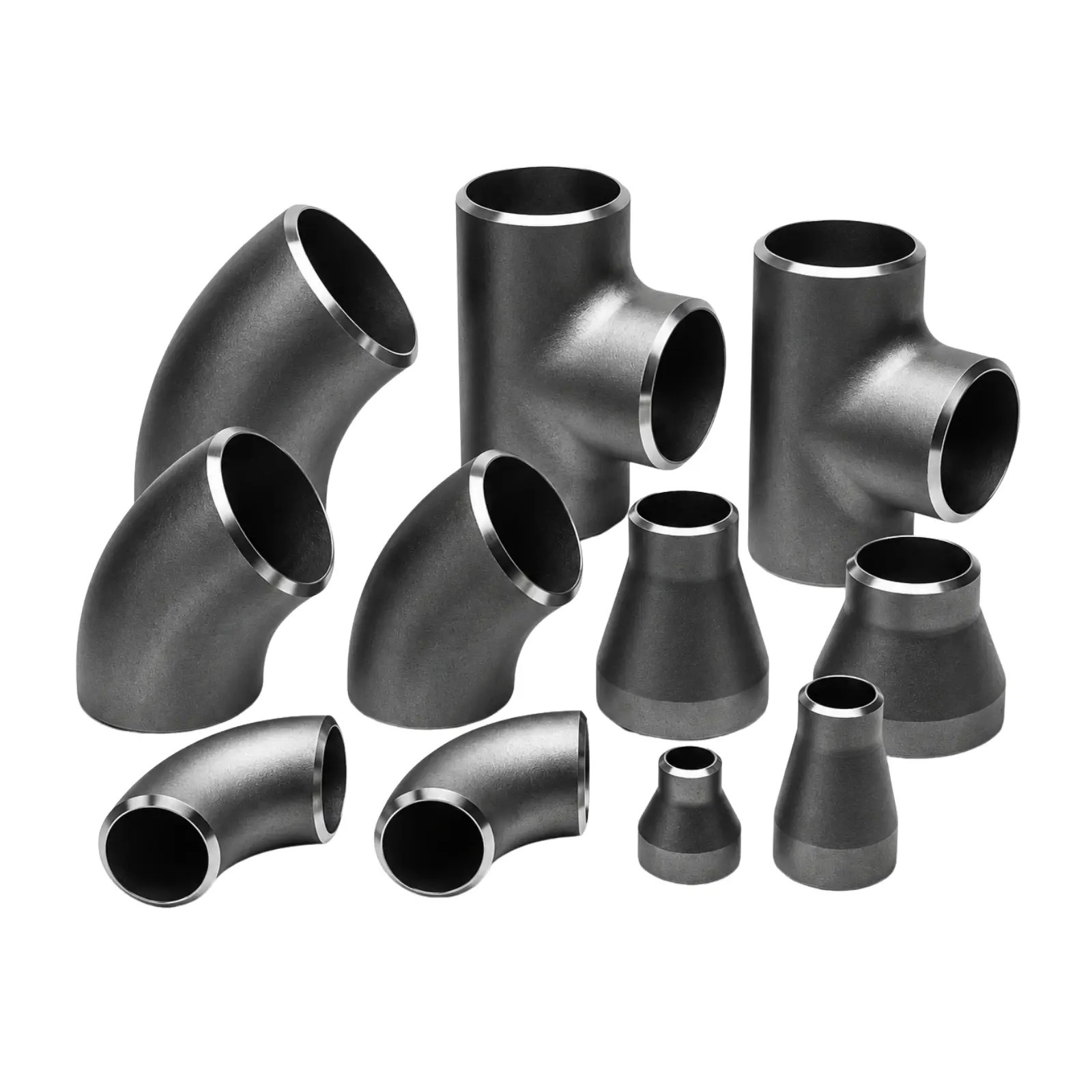
1. Elbow
Changes the direction of flow. Common angles are 45°, 90°, and 180°.
– Long radius (LR): typically a smoother flow path.
– Short radius (SR): more compact, but generally produces greater flow resistance.
2.Tee
Creates a branch connection, usually at 90°.
– Equal tee: run and branch have the same nominal size.
– Reducing tee: branch size is smaller than the run size.
3.Reducer
Connects pipes of different nominal sizes.
– Concentric reducer: centerlines remain aligned.
– Eccentric reducer: one side is flat, useful for maintaining a preferred pipe alignment in appropriate services.
4.Cap
Closes the end of a pipe. Commonly used in permanent closures or piping arrangements designed for future modifications.
5.Pipe Bend
Changes flow direction through a curved pipe section. Hot-induction bends are useful for large-diameter pipelines and certain long-radius configurations.
6.Branch fittings / Olets
Examples include weldolets, sockolets, and threadolets. These create branch connections on a larger header and are selected according to the piping design and branch reinforcement requirements.